
































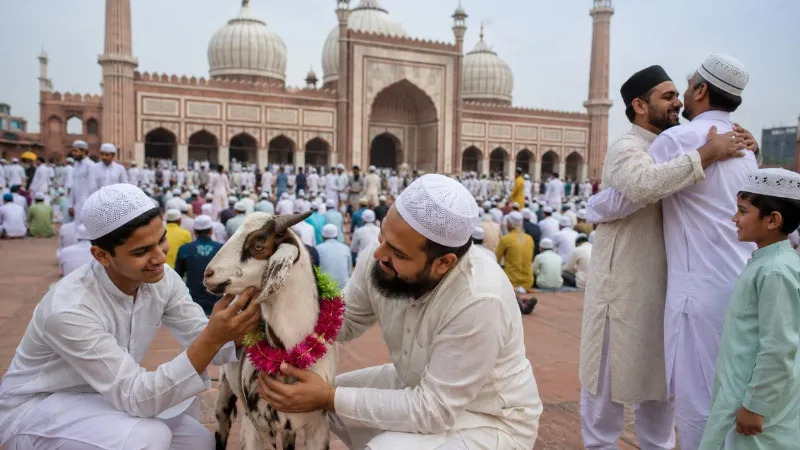
Ahead of Bakri Eid 2026, the debate around cow Qurbani has intensified in West Bengal after the state government introduced fresh restrictions on cattle slaughter and sales.
The move comes after the Bharatiya Janata Party-led state government issued a notification regarding animal slaughter rules under the West Bengal Animal Slaughter Control Act, 1950.
The decision has sparked concern among cattle traders and dairy owners, many of whom say their businesses could suffer heavy financial losses before Eid-al-Adha.
Bengal Government Issues New Rules Before Bakri Eid
The state home department, headed by Chief Minister Suvendu Adhikari, released the notification on May 13. According to the order, bulls, cows, calves, buffaloes, and other cattle cannot be slaughtered without official permission.
People must first obtain a written certificate jointly approved by local municipal or panchayat authorities and government veterinary surgeons. The certificate must confirm that the animal is either:
- Over 14 years old and no longer fit for work or breeding
- Permanently injured, deformed, or suffering from an incurable disease
The government also warned of jail time and fines for those violating the rules.
What the 2018 Calcutta High Court Order Said
The notification also refers to a 2018 order by the Calcutta High Court. The court had stated that slaughtering animals, including cows and buffaloes, in public places is strictly prohibited.
The order also mentioned that cow sacrifice is not considered a compulsory religious practice under Islam, referring to a Supreme Court judgment in the Mohd. Hanif Quareshi case.
Muslim Clerics Advise Against Cow Qurbani in Bengal
Several Muslim religious leaders have now appealed to the community to avoid cow Qurbani during Bakri Eid. Shafique Qasmi, the Imam of Kolkata’s famous Nakhoda Masjid, urged Muslims not only to avoid offering cows but also to stop eating beef altogether.
He said Hindu cattle breeders and traders would also suffer financially because many of them depend on Eid-related cattle sales for income. Another religious leader, Jiaudin Siddiqui, said Muslims could choose goats and sheep instead of cows for Qurbani out of respect for Hindu sentiments.
(Also Read: Bakri Eid 2026: Delhi Government Issues Strict Rules on Animal Sacrifice, Illegal Markets and Waste Disposal)
Dairy Farmers Fear Losses Due to Cow Qurbani Restrictions
The restrictions have created panic among cattle and dairy farmers across Bengal. Many owners say they are now unable to sell non-milch cows that are no longer producing milk.
A dairy owner from Bhangar claimed he could suffer losses of nearly ₹12 lakh because buyers are avoiding cattle purchases after the government notification. He said dairy farmers often take loans from banks to buy cattle and fodder, and now many are worried about repayment. Videos of distressed dairy owners asking for government support have also gone viral on social media.
ISF Leader Requests Government for Exemption
Nawsad Siddiqui, MLA from Bhangar and a leader linked to Furfura Sharif, has written to the state government seeking temporary exemption from the restrictions during the festival.
He argued that the cattle trade and leather industry support thousands of families and contribute significantly to the economy. Siddiqui also referred to Section 12 of the 1950 Act, which allows the government to grant exemptions for religious purposes if needed.
BJP Defends the Decision
Meanwhile, Bengal BJP spokesperson Debjit Sarkar defended the government’s stand. He said the law was originally introduced in 1950 and the BJP was simply enforcing existing legal provisions.
He also stated that while exemptions are possible under the law, the government must consider public sentiment because many people in India worship cows. The issue has now turned into a major political and social debate in West Bengal ahead of Bakri Eid 2026.