





































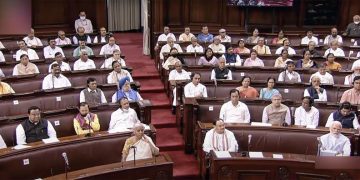






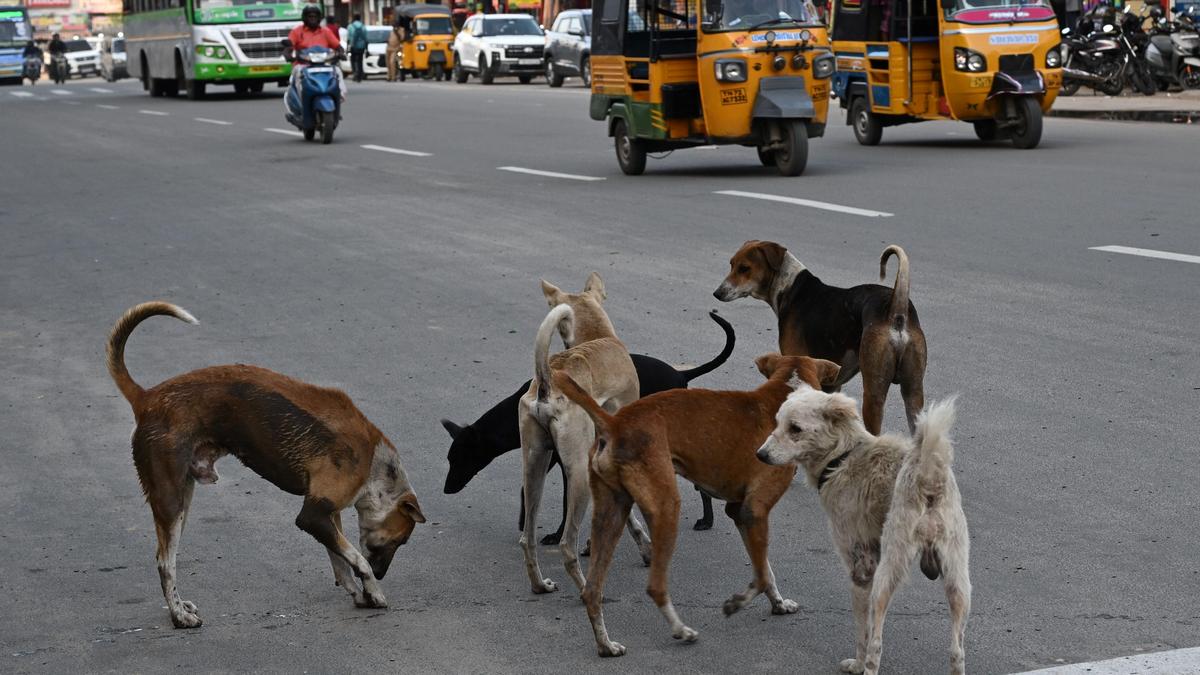
The Supreme Court of India on Tuesday refused to change its November 2025 order directing authorities to remove stray dogs from public places such as hospitals, schools, colleges, railway stations and bus stands.
The court said it could not ignore the growing number of stray dog attacks reported across the country. It added that public safety, especially the safety of children and elderly citizens, remains a major concern.
Court Highlights Rising Stray Dog Attacks
While defending its earlier decision, the Supreme Court said many serious incidents involving stray dogs had been reported in recent months. According to the bench, children had been attacked and injured, elderly people had suffered bites, and even foreign tourists had faced attacks in public places.
The court observed that the situation had become dangerous in crowded public areas where people expect safety and free movement.
Concerns for Children and Elderly
The bench stressed that young children and senior citizens are the most vulnerable during stray dog attacks. It said they should not be left to protect themselves in such situations.
The court also criticised the lack of proper action by authorities to control the issue effectively.
What the Supreme Court Ordered in 2025
In its landmark order issued on November 7, 2025, the Supreme Court of India directed local authorities to remove stray dogs from high-footfall public places.
The order covered locations such as:
- Schools
- Hospitals
- Colleges and educational campuses
- Sports complexes
- Railway stations
- Bus stands
The court also instructed authorities not to release the dogs back into these areas after sterilisation and vaccination. Instead, the dogs must be shifted to designated shelters.
Court Suspends CSVR Model in Public Areas
The Supreme Court also suspended the “Capture-Sterilise-Vaccinate-Release” (CSVR) system in crowded public places.
Under the Animal Birth Control (ABC) Rules, stray dogs are usually captured, sterilised, vaccinated and then released back into the same area. However, the court said this method should not continue in places where public safety could be affected.
The bench ruled that such dogs should instead be relocated to proper shelters.
Court Refuses to Dilute Earlier Order
During Tuesday’s hearing, the Supreme Court refused to recall or weaken its previous directions.
The bench said a “Darwinian principle of survival of the fittest” seemed to be operating in society, where weaker and vulnerable people were forced to manage the dangers on their own.
The court added that governments have a legal responsibility to protect citizens from preventable threats.
Article 21 and Public Safety
The Supreme Court also referred to Article 21 of the Indian Constitution, which guarantees the right to life and personal liberty. According to the court, this right also includes the freedom to move safely in public spaces without fear of physical attacks or dog bites.
The bench said citizens should not live under constant fear while visiting schools, hospitals, railway stations or other public places.
Governments Must Act, Says Court
The court strongly stated that governments cannot remain silent spectators while such incidents continue to happen. It observed that laws and systems already exist to manage stray dog populations and ensure public safety. However, authorities must properly implement these measures to prevent attacks and protect citizens.
The Supreme Court’s latest remarks make it clear that public safety will remain the top priority while dealing with the stray dog issue across the country.