








































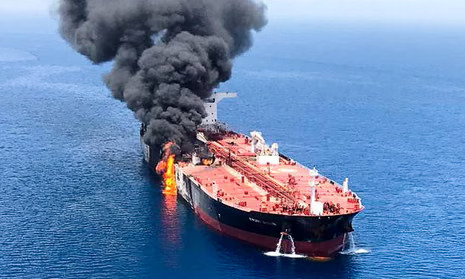
The Iran oil tanker attack has intensified tensions across the Middle East, raising fears of a major global energy crisis. Iran allegedly set two fuel tankers on fire in Iraqi waters while increasing attacks on oil and transport facilities in the region. The escalation comes amid an ongoing war involving joint U.S. and Israeli air strikes on Iran, which began nearly two weeks ago. The conflict has already caused heavy casualties and disrupted global oil supply chains, pushing energy markets into uncertainty.
Iranian officials warned that oil prices could rise dramatically, even reaching $200 per barrel, as regional instability threatens global fuel supplies.
How the Iran Oil Tanker Attack Escalated the Conflict
The Iran oil tanker attack marks a serious expansion of the ongoing conflict. Maritime security agencies reported that explosive-laden boats targeted two fuel tankers in Iraqi waters, setting them ablaze. One crew member was killed, and several ships were damaged after projectiles struck merchant vessels traveling through Gulf waters.
Port authorities and risk assessment firms confirmed that the incident created panic among shipping operators, as vital trade routes in the region became unsafe. The Middle East is responsible for a significant share of global oil exports, meaning disruptions here quickly affect international markets.
In addition to tanker attacks, Iran reportedly targeted fuel storage tanks at an energy facility in Bahrain’s Muharraq area. These actions suggest a broader strategy aimed at energy infrastructure rather than isolated military targets.
( Also Read: US to Build First New Oil Refinery in 50 Years With Reliance Investment)
War Impact: Rising Casualties and Regional Instability
The conflict began following coordinated air strikes by the United States and Israel targeting Iranian military sites. Since then, violence has spread across multiple countries in the Middle East.
Reports indicate that around 2,000 people have been killed so far. According to the United Nations Children’s Fund (UNICEF), more than 1,100 children have either died or been injured during the fighting. Humanitarian groups warn that the situation could worsen if hostilities continue.
The war has also disrupted transportation networks and trade routes, creating uncertainty for businesses and governments worldwide. Airlines, shipping companies, and oil traders are closely monitoring developments as risks increase daily.
Oil Prices React Strongly to Iran Oil Tanker Attack
Global energy markets reacted quickly to the Iran oil tanker attack. Oil prices had already climbed close to $120 per barrel earlier in the week before stabilising around $90. However, renewed fears about supply disruptions pushed prices up again by nearly 5%.
Asian markets followed Wall Street’s decline as investors worried about rising fuel costs and economic instability. Analysts believe that prolonged conflict could lead to one of the biggest energy shocks since the 1970s oil crisis.
Iranian military officials openly warned that oil prices could surge further. A spokesperson stated that regional security directly influences oil costs and accused the United States of destabilising the region.
Global Response: Strategic Oil Reserves Released
To prevent a severe fuel crisis, the International Energy Agency (IEA), which represents major oil-consuming nations, announced an unprecedented plan. The organisation recommended releasing 400 million barrels of oil from global strategic reserves.
This would be the largest coordinated release in history, aimed at stabilising markets and preventing extreme price spikes.
The United States also announced additional measures. U.S. Energy Secretary Chris Wright confirmed that President Donald Trump authorised the release of 172 million barrels from the U.S. Strategic Petroleum Reserve starting next week.
Officials hope these emergency supplies will calm markets and reduce pressure on consumers facing rising fuel prices.
Donald Trump’s Statements on the War
Amid growing tensions, President Donald Trump addressed supporters at a campaign-style rally in Kentucky ahead of upcoming midterm elections. He claimed that the United States had effectively won the conflict but emphasised the need to complete remaining objectives.
Trump also supported the strategic oil reserve release, stating that the decision would help reduce oil prices while addressing threats to global security.
His comments came as political pressure increased at home, with economic concerns and fuel prices becoming major issues for voters.
Economic Shock and Global Market Concerns
Experts warn that the Iran oil tanker attack could trigger long-term economic consequences if instability continues. Higher oil prices affect transportation, manufacturing, and food costs worldwide.
Shipping insurance rates in the Gulf region have already increased sharply, and some companies are reconsidering routes through high-risk areas. This could slow global trade and increase delivery costs for goods.
Financial markets have shown signs of nervousness, with stock indexes falling in both the United States and Asia. Investors fear that prolonged conflict could slow global economic growth.
What Happens Next for Global Energy Markets
Energy analysts believe the coming weeks will be critical. If attacks on oil infrastructure continue, supply shortages may worsen despite emergency reserve releases.
Governments are now focusing on protecting key shipping lanes and ensuring stable energy supplies. Diplomatic efforts are also underway to prevent further escalation.
However, uncertainty remains high. The Iran oil tanker attack has demonstrated how quickly regional conflicts can transform into global economic challenges.