































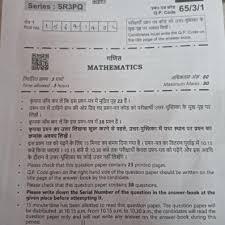
The CBSE QR code rickroll controversy has become one of the most talked-about topics during this year’s board exam season. Soon after the Class 12 mathematics exam held on March 9, students began sharing posts online claiming that a QR code printed on the question paper led to a famous internet prank instead of exam-related content. The incident quickly turned into viral CBSE news, leaving students confused and social media users amused.
While many screenshots circulated widely, the truth behind the CBSE exam QR code viral claim is still unclear. Here’s everything we know so far.
What Is the CBSE QR Code Rickroll Controversy?
After completing their Class 12 mathematics exam conducted by the Central Board of Secondary Education (CBSE), several students posted online saying that scanning the QR code printed on the question paper redirected them to a music video instead of official information.
According to these posts, the QR code opened the song “Never Gonna Give You Up” by Rick Astley — a classic internet prank known as “rickrolling.” The claim quickly spread across platforms like Reddit and X (formerly Twitter), where students shared screenshots and funny reactions.
However, the situation became confusing because not all students reported the same experience. Some said the QR code only displayed simple alphabet markers like “A” or “Q,” which are normally used for paper identification and security.
What Is the CBSE QR Code Rickroll Controversy?
After completing their Class 12 mathematics exam conducted by the Central Board of Secondary Education (CBSE), several students posted online saying that scanning the QR code printed on the question paper redirected them to a music video instead of official information.
According to these posts, the QR code opened the song “Never Gonna Give You Up” by Rick Astley — a classic internet prank known as “rickrolling.” The claim quickly spread across platforms like Reddit and X (formerly Twitter), where students shared screenshots and funny reactions.
However, the situation became confusing because not all students reported the same experience. Some said the QR code only displayed simple alphabet markers like “A” or “Q,” which are normally used for paper identification and security.
What Did Students Actually Experience?
Many students from exam centres across Delhi and the NCR region stated that scanning the QR code did not open any external link. Instead, it showed internal verification details used by CBSE to confirm the authenticity of the question paper.
Reports reviewing multiple copies of the exam paper suggested that the QR code mainly served administrative purposes. This raised doubts about whether the viral screenshot represented a real case or a modified image shared online for fun.
Because of these mixed experiences, the CBSE exam QR code viral story now sits somewhere between fact and internet rumor.
Has CBSE Responded to the Viral Claim?
So far, the Central Board of Secondary Education has not released any official statement regarding the alleged QR code prank.
Without confirmation from the board, it remains uncertain whether:
- A different version of the paper contained an external link,
- The screenshot was edited or misleading, or
- The entire incident was simply an online joke that gained momentum.
The lack of clarification has only increased curiosity among students and parents following this unusual piece of CBSE news.
What Is a Rickroll? Understanding the Internet Prank
To understand why the story became so popular, it helps to know what “rickrolling” means.
Rickrolling is an online prank where someone tricks users into clicking a link that unexpectedly opens the music video for Never Gonna Give You Up. The meme first became popular in the mid-2000s and has remained one of the internet’s longest-running jokes.
People usually expect useful information but instead see the catchy 1980s song, creating a humorous surprise.
Because QR codes are normally trusted tools, the idea of a CBSE QR code rickroll amused many internet users.
Social Media Reactions: Humor, Shock, and Doubt
As screenshots spread online, reactions came quickly. Many students joked that even board exams were not safe from internet memes.
Some users described it as the “biggest rickroll ever,” while others laughed about students being pranked during a stressful exam period. Memes and humorous comments flooded discussion forums within hours.
However, not everyone found the situation funny.
Several students questioned how a prank link could appear on an official exam document. Since QR codes on board papers are mainly used for security verification, some users raised concerns about exam safety and digital reliability.
One common concern was whether exam materials could accidentally link to unrelated content, which would be a serious issue if proven true.
Why QR Codes Are Used in CBSE Exams
QR codes have become common in board examinations across India. CBSE uses them mainly for:
1. Authentication
They help verify that the question paper is genuine and not leaked or copied.
2. Tracking and Identification
Each paper version can be identified through coded markers.
3. Exam Security
Digital verification helps authorities trace documents if irregularities occur.
Because of these purposes, experts believe it is unlikely that an official exam paper would intentionally include an external entertainment link.
Fact vs Rumor: What We Know So Far
Here is a simple breakdown of confirmed and unconfirmed information:
Confirmed
- The Class 12 maths exam took place on March 9.
- Question papers included QR codes for verification.
- Viral screenshots circulated widely online.
Unconfirmed
- Whether any QR code actually redirected to a music video.
- Whether all exam papers were affected.
- Whether the screenshot was genuine or edited.
Until CBSE releases a clarification, the truth behind the CBSE QR code rickroll remains uncertaine