












































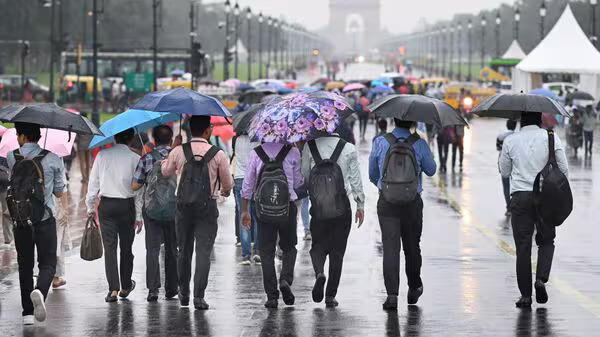
The weather today in Delhi surprised many residents as rain and cool winds returned just when the city was preparing for the summer season. Instead of rising heat, people experienced cloudy skies, light showers, and a noticeable drop in temperature across Delhi and nearby areas including Noida, Ghaziabad, Faridabad, and Gurugram.
According to the India Meteorological Department (IMD), this sudden weather change happened due to a rare western disturbance affecting northwest India. The system brought rainfall and prevented temperatures from increasing as expected during March.
Many people stepped out wearing light jackets again as the cool conditions reminded them of winter days.
Rainfall and Yellow Alert Issued in Delhi-NCR
Delhi-NCR woke up to rain on Friday morning, prompting the IMD to issue a yellow alert for changing weather conditions. The minimum temperature was recorded at 16°C, which is about 4.5 degrees below the normal average for this time of year.
Rainfall activity had already started on Wednesday evening and continued in several parts of the region. Strong winds and scattered showers kept temperatures low throughout Thursday as well.
The maximum temperature dropped to 26.8°C, falling below 30°C for the first time in nearly a month. This made it one of the coolest days recorded recently and provided temporary relief from early summer heat.
Why Temperatures Dropped Suddenly
The unexpected cooling was caused by a western disturbance — a weather system that usually brings winter rain to North India. However, experts described this particular system as unusual because of its strong structure and wide coverage.
A long trough line stretching across thousands of kilometers developed within the system, which is considered rare. Such formations can create thunderstorms, heavy clouds, and sudden rainfall even during seasonal transitions.
Because of this system, Delhi’s temperatures stayed below normal levels despite being close to the summer season.
Experts Explain the Rare Western Disturbance
Unusual Weather Pattern Observed
Weather experts noted that this disturbance behaved differently compared to typical systems. Climate observers explained that the system intensified quickly, increasing cloud formation and rainfall activity across North India.
Forecast discussions suggested that moderate to heavy rain spells were possible throughout the day in Delhi-NCR and nearby states. Experts also warned about possible waterlogging in low-lying areas due to continuous showers.
Impact Expected Beyond Delhi
Meteorologists predicted that rainfall activity would gradually shift toward interior parts of Uttar Pradesh later in the day. Cities such as Lucknow and Kanpur were expected to experience thunderstorms as the system moved eastward.
Satellite images shared by weather watchers showed the large size of the disturbance, with some observers calling it one of the strongest systems seen in recent years.
When Will the Weather Improve?
Experts said the most active phase of the system would last only a few hours before conditions begin improving. Moderate rainfall was expected to continue until afternoon, after which skies would slowly start clearing across North India.
However, eastern parts of the country could see increased rainfall as the system moves further east.
The weather update indicates that while the cool spell feels pleasant, it is only temporary.
Temperature Forecast for Coming Days
Daytime Temperatures Likely to Rise
According to IMD forecasts, temperatures in Delhi will gradually increase once the western disturbance weakens. The maximum temperature may reach around 31°C by Sunday.
By Monday and Tuesday, temperatures are expected to touch nearly 32°C, signaling a return of warmer conditions toward the end of March.
Comfortable Nights to Continue
Minimum temperatures are likely to stay between 12°C and 14°C over the weekend. This means nights will remain relatively comfortable even as daytime heat slowly returns.
What Residents Should Expect Next
The sudden shift in weather shows how unpredictable seasonal transitions can be in North India. March often brings mixed conditions as winter ends and summer approaches.
For residents, the rainfall improved air quality, reduced dust levels, and provided short-term relief from heat. However, changing weather conditions also mean people should stay updated with forecasts and prepare for sudden variations.
Experts advise keeping umbrellas handy and staying cautious during strong winds or thunderstorms.