

































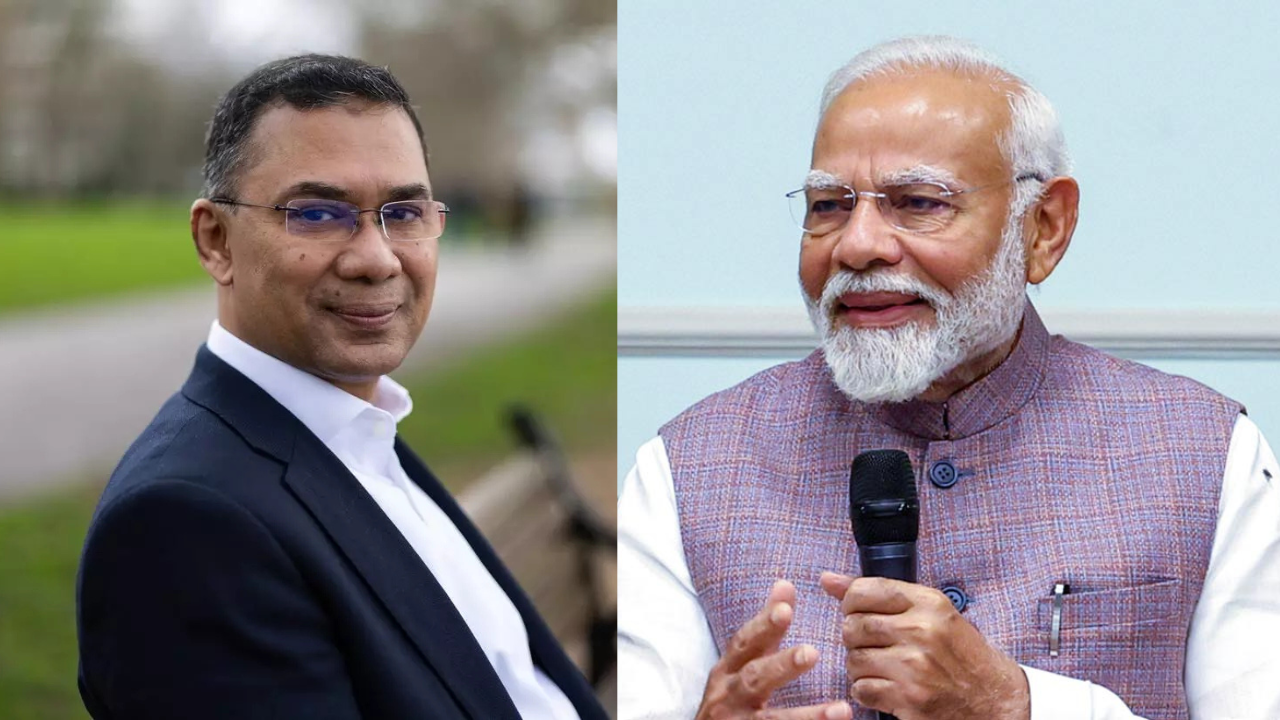
Bangladesh election BNP victory has reshaped the country’s political landscape as the Bangladesh Nationalist Party (BNP) claimed a decisive win in the national polls.
Indian Prime Minister Narendra Modi congratulated Tarique Rahman on the party’s strong performance. He said the victory reflects the trust of the Bangladeshi people in Rahman’s leadership.
In a post on X, PM Modi said India will continue to support a democratic, progressive, and inclusive Bangladesh. He also expressed interest in working closely with the new leadership to strengthen bilateral relations and achieve shared development goals.
India-Bangladesh Relations May See a Reset
PM Modi’s message signals a diplomatic outreach after recent tensions between New Delhi and Dhaka. Relations faced strain during the interim leadership of Muhammad Yunus. During this period, authorities reported concerns over border security, illegal migration, and communal tensions.
India and Bangladesh shared stable ties during the tenure of former prime minister Sheikh Hasina. Her government focused on trade, connectivity, border management, and water-sharing agreements. Hasina fled to India in August 2023 after a student-led uprising.
Concerns Remain, Assurances Offered
New Delhi remembers BNP’s 2001–2006 rule as a challenging phase. That period saw cross-border insurgency issues and the 2004 Chittagong arms haul case.
However, Tarique Rahman has promised a fresh start in ties with India. He has pledged cooperation on counterterrorism, the Teesta water-sharing issue, and the protection of Hindu minorities in Bangladesh. Still, his “Bangladesh First” policy raises questions about future strategic alignment with India.
Analysts say the BNP Bangladesh election victory could lead to a reset in India-Bangladesh relations under the new leadership. The Bangladesh election outcome is expected to shape regional politics and India-Bangladesh relations in the coming years.